
At the recent Esri UK conference I was reminded of my time in the Libyan desert many years ago – a geospatial career highlight with surprising parallels to my work as a coach today.
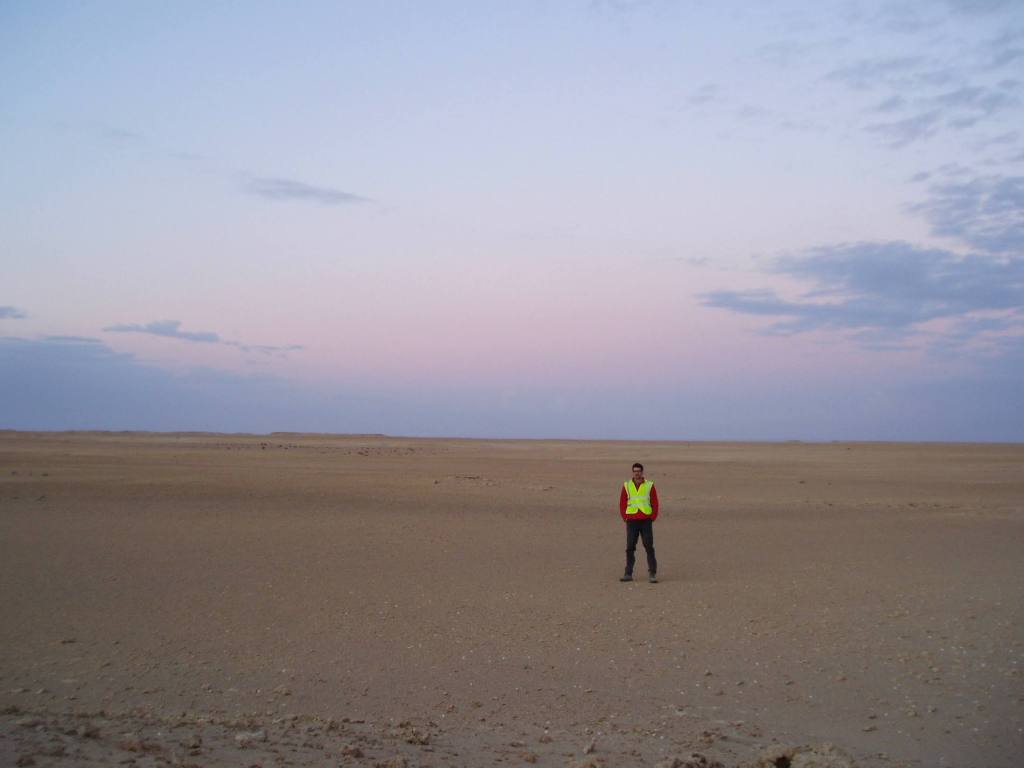
I loved travelling with seismic survey crews across the Sahara. Endless space, a clear task, and daily progress visible on a map. And welcoming people with close bonds fostered by the remoteness of the environment.
Today these are the very things I help teams and leaders create: space, clarity, progress, strong relationships.
At the conference I had many hallway conversations with geospatial leaders. When I asked what keeps them up at night, there were common themes. Of course there was the relentless pace of AI but also the issues of organisational flux and silos, having to influence without control, and the need to bridge cultural divides – early adopters vs laggards, providers vs users, early vs late career staff, regional vs international teams, and even leaders vs their own teams.
The conference had a real buzz with lots of inspiring people and use cases, but in these hallway conversations there was also something that felt more like fear or weariness.
For an event whose theme was “integrating everything everywhere” it was a timely reminder that technology can be a great enabler – but only if we bring people along for the ride. I was glad to see the term “human-centric“ in the opening presentation.
Human-centredness is for all of us to shape – it’s not something we can outsource to tech tools or providers. In my work as a coach and facilitator, being person- or client-centred (as I prefer to call it) starts with being real with each other.
In the desert I loved not only the epic landscapes and warm hospitality but also how fully it engaged my senses. I could touch the sand, taste the wind and feel the seismic vibrations under my feet. Everything felt real, and never before (or since) have I felt so aware of standing with two feet on a small planet in a vast universe. See photo.
The analogy here is not that we should take people out into the desert for spiritual enlightenment. It’s that we need to bring people together in a way that feels real for them. Whatever your mission, it needs to be their journey. It’s not ‘change management’ because that would imply we already know the destination. And it’s not that people need to ‘change’ – that’s an impossible task – they simply need to feel safe and resourced enough to display the behaviours we want to see.
And that requires space.
The space to build trust. To build clarity. To enable progress. And to create strong bonds among the people who deliver your mission. This is what moves the dial.
Some people commented that this human-centred work could keep me busy for a while. I certainly hope so. Because bringing people together to deliver a mission is not a tech problem.
And it doesn’t even need a sandy desert.
—
Written without AI.
Photo: author in Libya, 2007.

