
What does a good career look like today? When graduates struggle to find work and midlife professionals dream of quitting, is that even the right question?
As a seventies child I was part of Gen X, the first cohort to see cracks appearing in the promise of endless growth, predictable careers and secure retirement. Today feels worlds away from that. What does a useful aspiration look like now?
Our hunter-gatherer ancestors would be appalled by how we live and work today. Historically seen, modern workplaces are an anomaly – a massive departure from anything that came before. Yet our biology remains very much the same. No wonder so many people feel out of sorts at work.
Anthropological studies show that hunter-gatherers experienced a higher quality of life than we do today. While lacking material wealth they enjoyed tribal support, a sense of purpose and belonging, and ample time for family, rest and play. They had no concept of ‘work’ and spent under 20 hours a week on subsistence tasks. It’s almost like they had it all figured out…
I wonder, what could we learn from our ancestors in today’s workplace?
🌳 Hunter-gatherers were adaptable, multi-skilled generalists. They switched roles as needed and learned by doing. This gave them a high degree of resilience and agility. Today, we first develop specific skills and then look for roles or problems that go with them. Hunter-gatherers would find that backwards. They would probably advise us to experiment more, learn on the job, and figure things out as we go along.
🌳 Like hunter-gatherers, we need to find our tribe – people we can rely on and get on with. My career coaching clients are often taken aback by the question “what kind of people would you like to work with?” Even if they’re clear on their ‘What’ and ‘Why’, almost nobody thinks about the ‘Who’. And yet, finding our tribe is probably the single most important thing we can do for a fulfilling life and career.
🌳 Hunter-gatherers lived a life of sufficiency. They had few material possessions; instead they had time, skills and relationships. They had ‘enough’ and trusted their ability to figure things out together. What could that look like for us today? Ambition is useful, but beware: our society has a way of making us feel we always need more than we currently have. Instead, how could we channel that drive into the things that really matter? In return, what could benefit from being less accomplished? Would we even need retirement if we found a sustainable balance earlier in life?
Younger people, led by Gen Z, are already asking these questions. I see many of them forging new paths with a more agile, open minded and entrepreneurial approach. Are they rediscovering their inner hunter-gatherers?
Maybe we should look to them for inspiration.
—
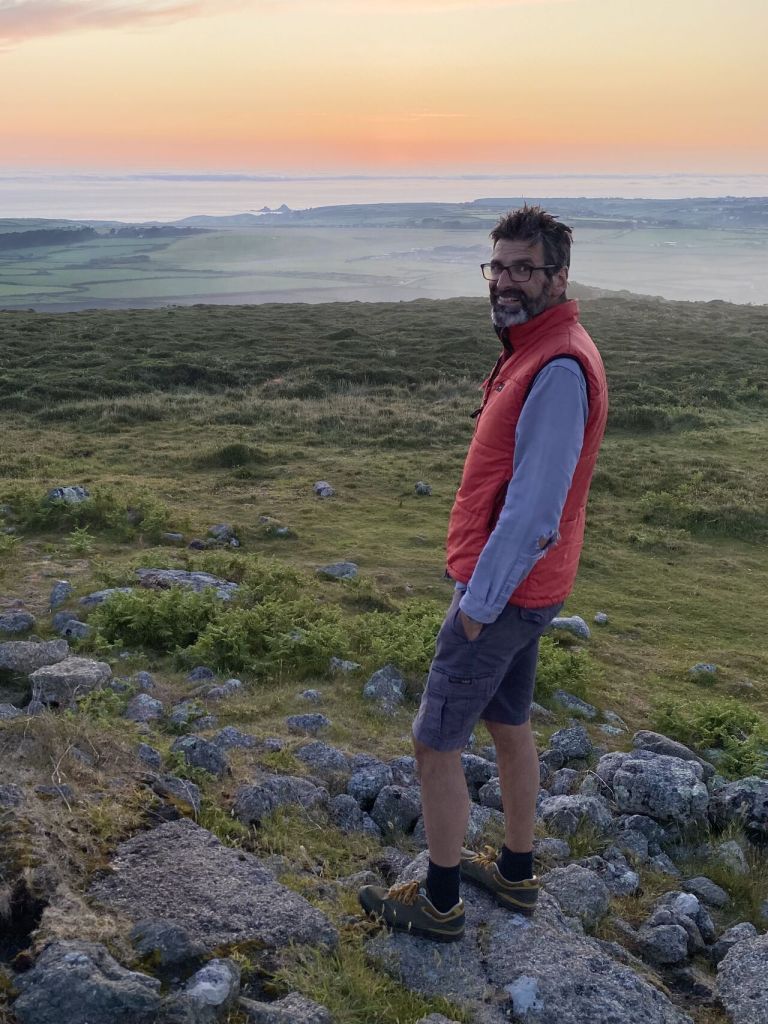
Photo: standing on Britain’s westernmost hill in an ancient landscape dotted with prehistoric sites

