
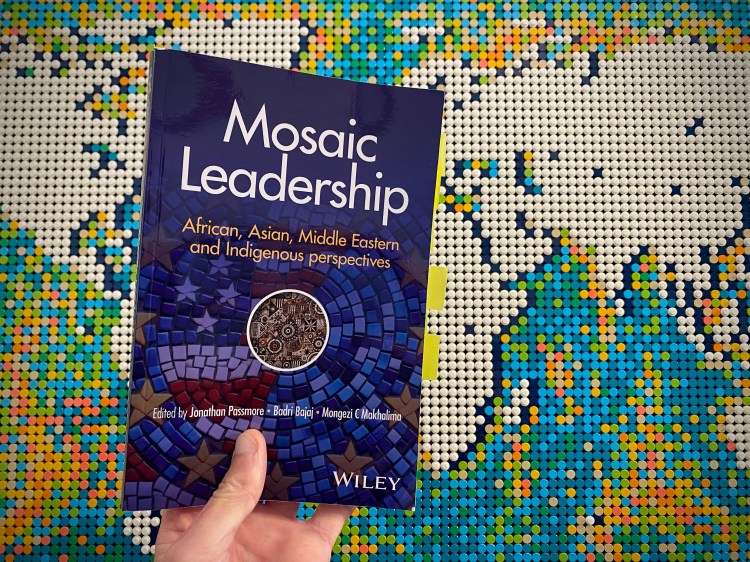
A perfect match for my Lego world map 😊 This new book offers fresh perspectives on how to lead in today’s complex world, drawing on wisdom from around the globe.
As a coach, I’ve grown increasingly circumspect of western leadership models. Not that they’re wrong – what’s not to like about authentic or servant leadership? – but for today’s challenges they’re simply not enough.
There’s a whole executive education industry still pumping out blinkered approaches that trace back to the industrial revolution, when everything – and everyone – was treated like a machine for extraction and optimisation.
We urgently need alternatives that are less disconnected from ourselves and the planet. This book shows there are many. Some, like Ikigai or Ubuntu, may be familiar. Others are new – to most of us anyway! – but have existed for centuries.
Leafing through dozens of approaches from around the world, I’m struck by how attuned some are to collective and planetary wellbeing, not to mention ethical rigour. What might our world look like today if some of these had prevailed?
Take for example the Islamic model of the Five Solar Moments. When I worked in Borneo and the Middle East, I was always impressed by how people would suddenly interrupt a meeting because it was time to go off and pray. It taught me a lot about the corporate hamster wheel. No need for wellness initiatives here: when the collective system provides time for grounding and reflection – five times a day – you are reminded that there are more important things in life than project meetings.
Of course, we shouldn’t romanticise non-western approaches just for being different or overlooked. Even if you can codify them, you can’t easily transplant the culture they grew from.
But this is a fantastic book that I’ll return to for years to come as a source of hope and inspiration for more sustainable, inclusive leadership. If only I’d had this earlier in my career when I managed global projects across diverse cultures. Highly recommended.
Mosaic Leadership: African, Asian, Middle Eastern and Indigenous Perspectives. Edited by Jonathan Passmore, Badri Bajaj, Mongezi C Makhalima, Wiley, 320 pages.
 True Horizon Coaching